



To assess the potential acoustic impacts on marine species, it is critical to fully understand sound source acoustic characteristics. BOEM has undertaken several studies to measure sound sources in both the laboratory and the field and has also used modeling approaches to better quantify propagation of certain sources. A comprehensive list of all sound sources that BOEM regulates can be found in the bureau’s Sound Source List. NOTE: The Sound Source List is a living document that BOEM will update as new information becomes available; please email boemacoustics@boem.gov with any suggestions or changes.
BOEM studies the following primary anthropogenic (man-made) sound sources to better understand underwater sound and its potential impacts on marine species.

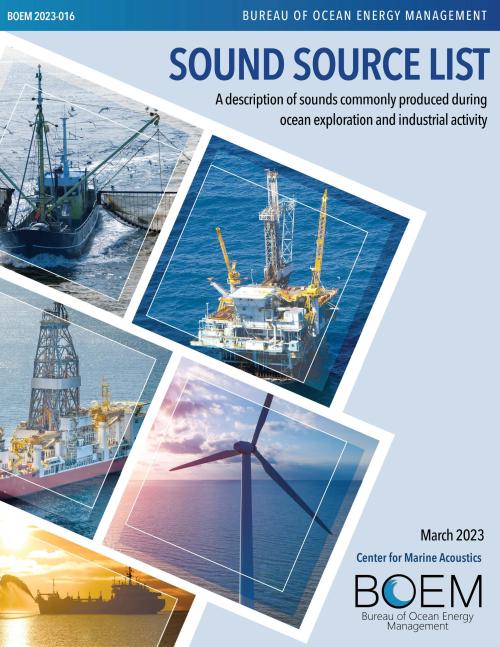
Seismic Airguns
The oil and gas industry uses airgun technology to identify and map oil and gas deposits under the seafloor. The technique releases pressurized air blasts to create powerful sound waves that penetrate the water column and seabed and return to the surface as echoes, which are recorded by audio receivers and analyzed by geophysicists. BOEM assesses the effects of seismic airguns on marine species to mitigate potential impacts.
BOEM uses commercially available and current, state-of-the-art models to calculate airgun arrays source levels and radiated sound fields. These models generate data for BOEM’s detailed impact analyses and have been rigorously tested and calibrated against numerous actual measurements for numerous operational individual airguns and arrays.
Alternative Seismic Sources
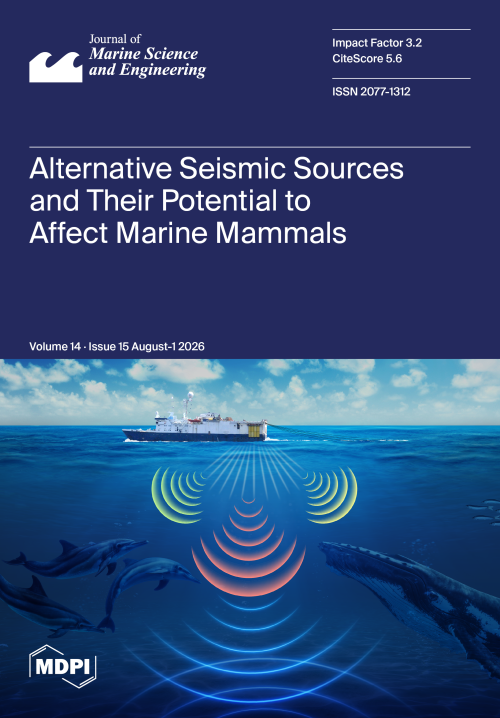
Several industry-developed technologies, which can be used to supplant traditional airguns, have finally reached market readiness. These include ultra low-frequency sources such as the Tuned Pulse Source™, Gemini Source™, and Harmony™ which are designed to produce more controlled and targeted acoustic signals with peak energy below 7 Hz. In addition, some marine vibroseis (MV) systems are available and are a very different type of technology. They emit controlled, continuous sweeps of acoustic energy over a range of frequencies and can be tuned for specific exploration needs.
BOEM and NOAA recently published a peer-reviewed paper that analyzed several alternative seismic technologies in terms of their potential to affect marine mammals. The authors found that all of the alternative technologies generally pose lower risk to marine mammals than traditional airguns. Several of the alternative sources can be considered “Tier 2” or even “Tier 3” based the evaluated configurations, which means they would require fewer mitigations, and in some cases, different permits, than Tier 1 sources. This paper is important because it provides regulatory certainty to G&G operators when they are designing their surveys.
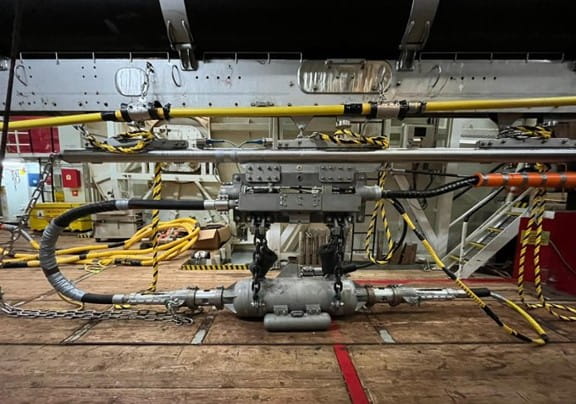
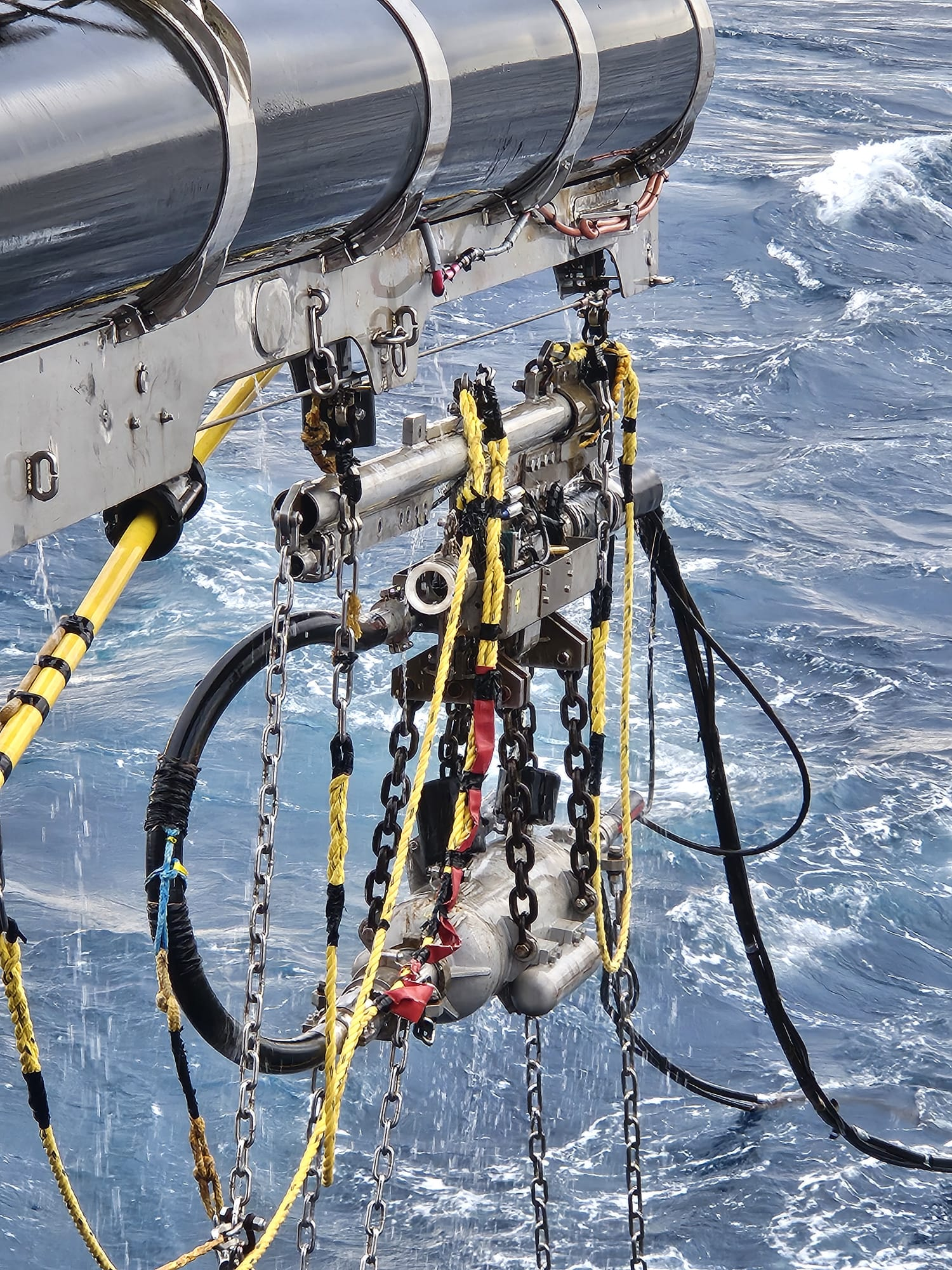
High-Resolution Geophysical (HRG) Sources
High-Resolution Geophysical (HRG) surveys use a suite of active sound sources to produce sounds that reflect off features within the water column, on the seafloor, and below the seabed. The sources used in HRG surveys have much less energy than those used in deep penetration seismic airgun surveys (above). HRG surveys occur across different phases within all BOEM’s program areas. Through the following studies, BOEM now has a consistent, streamlined approach to permitting the use of these sources.
Working with the U.S. Geological Survey (USGS), BOEM contracted a study measuring HRG sources in a carefully controlled and calibrated lab setting (Crocker and Fratantonio 2016). The Naval Undersea Warfare Center—the nation’s standard for underwater sound source calibration – conducted the initial source characterizations. Next, the BOEM/USGS team conducted in situ measurements of the sound fields produced by these HRG sources for various shallow water depths (10, 30, 50–100 m) and sediment types (sand and silt) (Halvorsen and Heaney 2018 with final calibration results by CSA Ocean Sciences 2020). Finally, the team identified how well commonly available underwater propagation model results compared to the measurements and recommended the best approaches to model the predicted sound fields for these systems (CSA Ocean Sciences 2021 Final Modeling Report and Appendix).
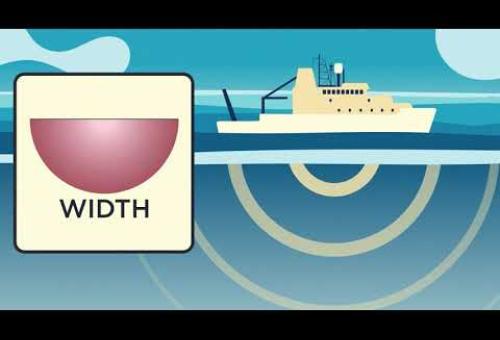
Using measurements from the 2016 study, BOEM worked with USGS and the National Science Foundation to complete a technical analysis of active acoustic sources (including both seismic airguns and HRG). Importantly, the 2022 paper describes several key physical factors that should be used when analyzing any sound source (e.g., beamwidth, duty cycle, radiated power, etc.) and used these factors to delineate four tiers of sound based on their potential to affect marine species. More information on sound source tiering is available on BOEM’s Regulatory Policy page.
Impact Pile Driving
Certain offshore energy projects use impact pile driving during foundation installations. The method uses a hydraulic hammer to strike the pile in quick succession and drive it into the seabed. In some cases, vibratory pile driving, a non-impulsive sound source, can be used in lieu of or in conjunction with impact pile driving. Since underwater sound generated by pile driving can affect marine species within the vicinity of construction, BOEM studies these potential impacts.
BOEM has developed a Sound Field Verification (SFV) protocol for documenting sound propagation from wind turbine foundation installation to estimate distances to regulatory thresholds for potential injury and harassment to marine life. This protocol is necessary to verify that the modeled acoustic fields used in BOEM’s analysis are conservative enough to properly estimate the number of acoustic exposures of protected marine species. Recorded measurements will be compared to defined targets to ensure that received levels measured by SFV recorders during installation are equal to or lower than levels modeled at those locations.
Underwater Explosions
Removing offshore structures no longer in use (e.g., decommissioned oil and gas platforms) often involves the use of underwater explosives to sever the structural components beneath the seafloor. Newer methods, such as mechanical cutting or low-order deflagration (for detonation of UXOs), are expected to be less impactful to marine species.
BOEM and the Bureau of Safety and Environmental Enforcement (BSEE) have produced a combined underwater acoustic source and propagation model capable of predicting the sound fields produced during the explosive removal of underwater structures. The model is based on acoustic measurements of the sound field produced for multiple explosive weights of standard configurations, for multiple water depths, charge depths (at or below the mudline), and sediment types. This model, called the UnderWater Calculator (UWC-3, version 3), is based on empirical measurements made on numerous such removals.