



Beneath the waves of the Atlantic Ocean lies a vast, little-seen world of canyons, coral forests, and methane seeps. To better understand and protect these fragile ecosystems, federal scientists launched the multi-agency Deep Sea Exploration to Advance Research on Coral/Canyon/Cold seep Habitats (Deep SEARCH) study to survey the deep waters along the U.S. East Coast from Virginia to Georgia.
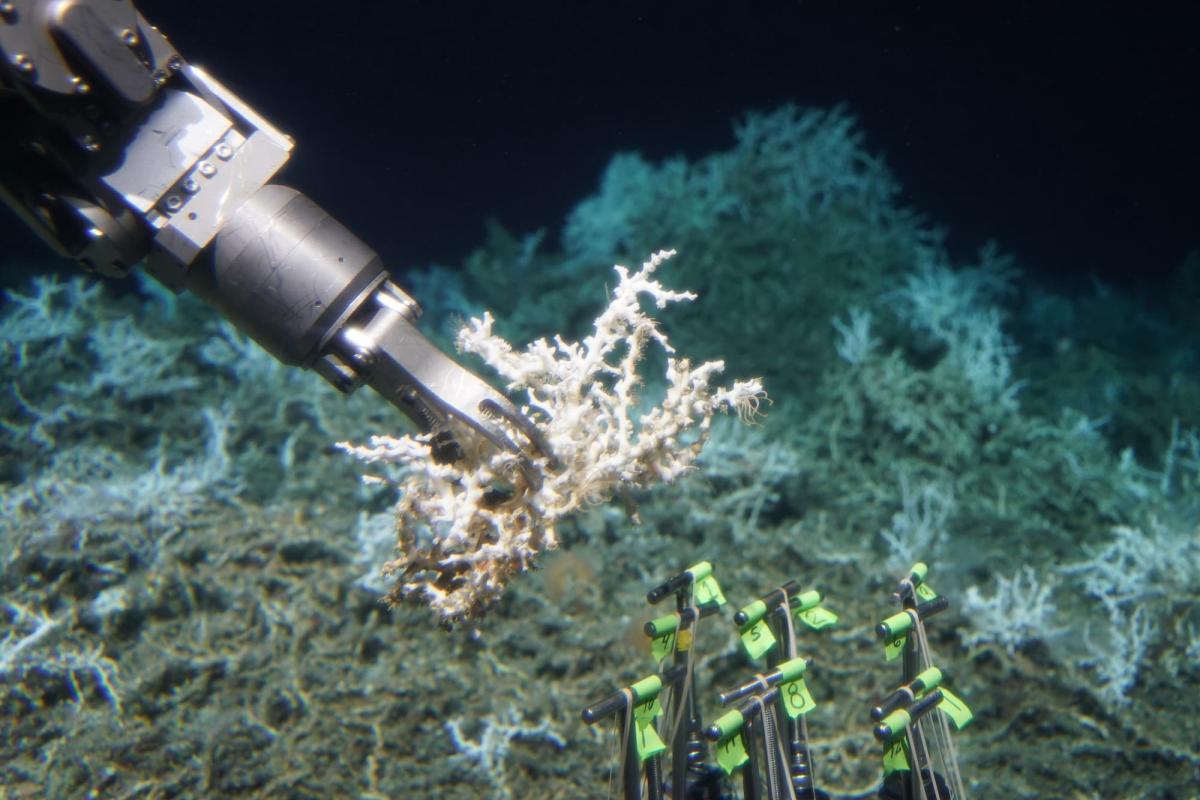
Across five research cruises, researchers from the Bureau of Ocean Energy Management (BOEM), the U.S. Geological Survey, the National Oceanic and Atmospheric Administration (NOAA), and the National Oceanographic Partnership Program mapped and analyzed remote seafloor habitats that could be affected by offshore energy and mineral development. Using advanced technology, they explored submarine canyons, documented methane seeps, and revealed vibrant deep-sea coral communities thriving in darkness thousands of feet below the surface. Among the highlights was the Richardson Reef Complex—now recognized as one of the largest cold-water coral reefs ever recorded.
One of the most surprising discoveries came in 2018, when researchers encountered extensive reefs of Lophelia pertusa (also known as Desmophyllum pertusum). Although this deep-sea stony coral is well known in the North Atlantic, finding it growing deeper and farther offshore than expected expanded scientists’ understanding of where such sensitive habitats can exist.
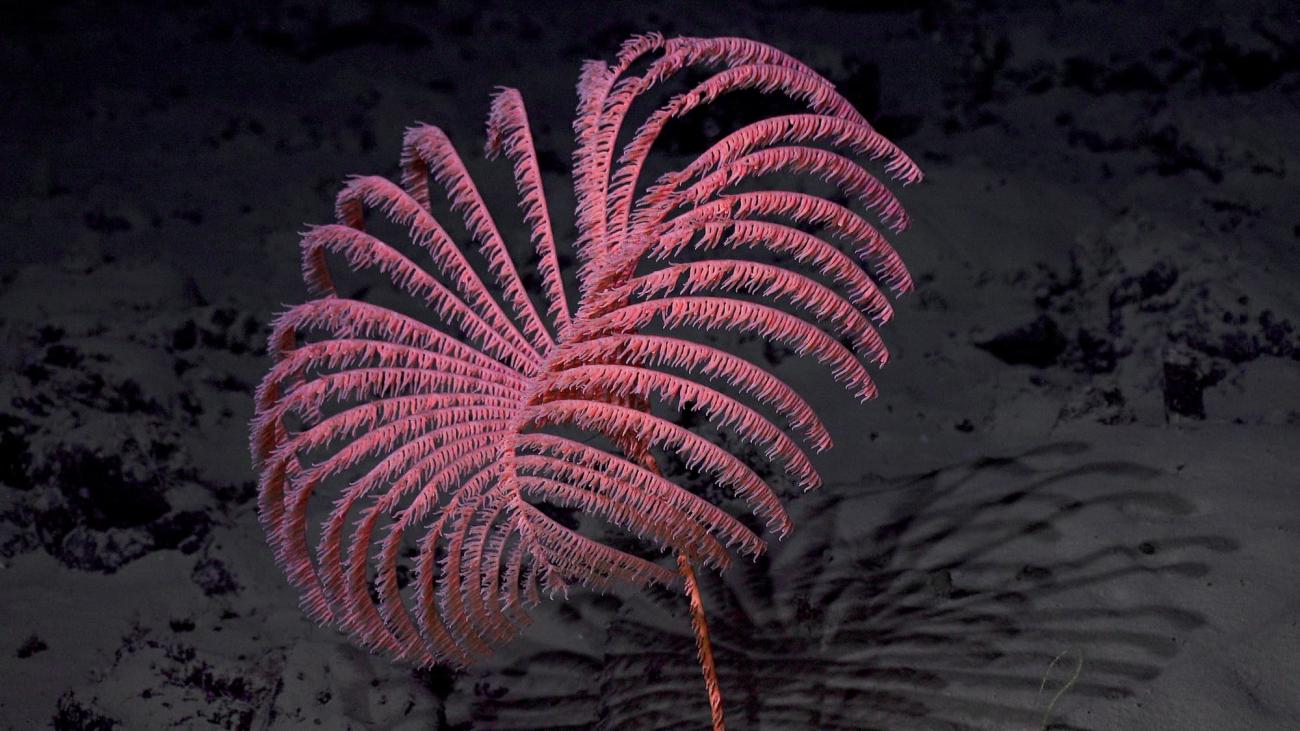
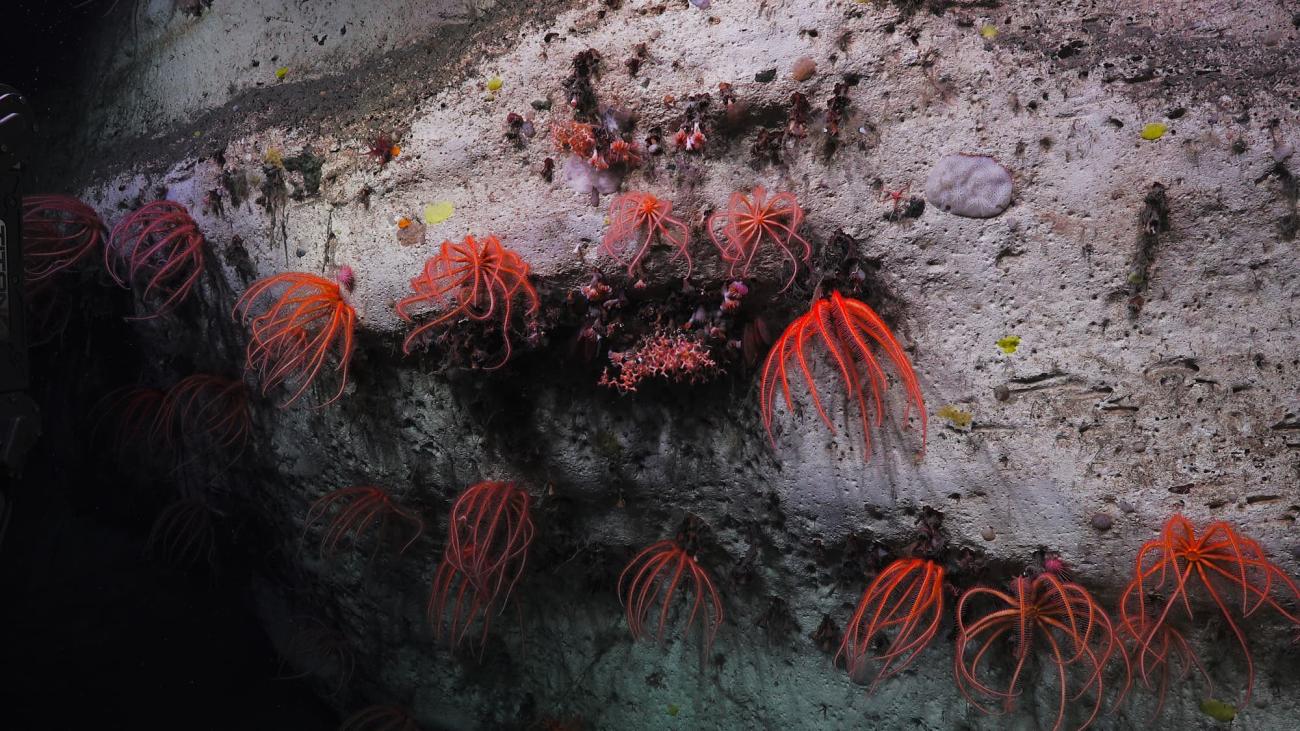
The data gathered through Deep SEARCH provide crucial baseline information for the Mid- and South-Atlantic. These findings will improve scientific models and help BOEM make informed offshore energy and marine mineral decisions. By revealing where vulnerable ecosystems flourish, the study strengthens conservation planning and ensures that future ocean development is guided by the best available science. Read more about A Deep SEARCH for Science.
Studies Across America
The study is featured in BOEM’s new Studies Across America StoryMap, an interactive online narrative highlighting the bureau’s research and environmental assessment efforts, which BOEM launched to help commemorate America’s 250th birthday.
For more information
- BOEM Deep SEARCH study report
- Exploring Coral Canyon, and Cold Seep Habitats off the Mid-Atlantic and Southeast Atlantic Coast: The Deep SEARCH Study
- Federal Ocean Partnership Launches Deep SEARCH Study off the Mid-and South-Atlantic Coast
- USGS Role in Deep SEARCH: Deep Sea Exploration to Advance Research on Coral, Canyon, and Cold-seep Habitats
- Deep SEARCH 2019: DEEP Sea Exploration to Advance Research on Coral/Canyon/Cold seep Habitats
- Environmental Studies Information | Bureau of Ocean Energy Management
-- BOEM --
The Department of the Interior’s Bureau of Ocean Energy Management (BOEM) manages development of U.S. Outer Continental Shelf (OCS) energy, mineral, and geological resources in an environmentally and economically responsible way.